Introduction
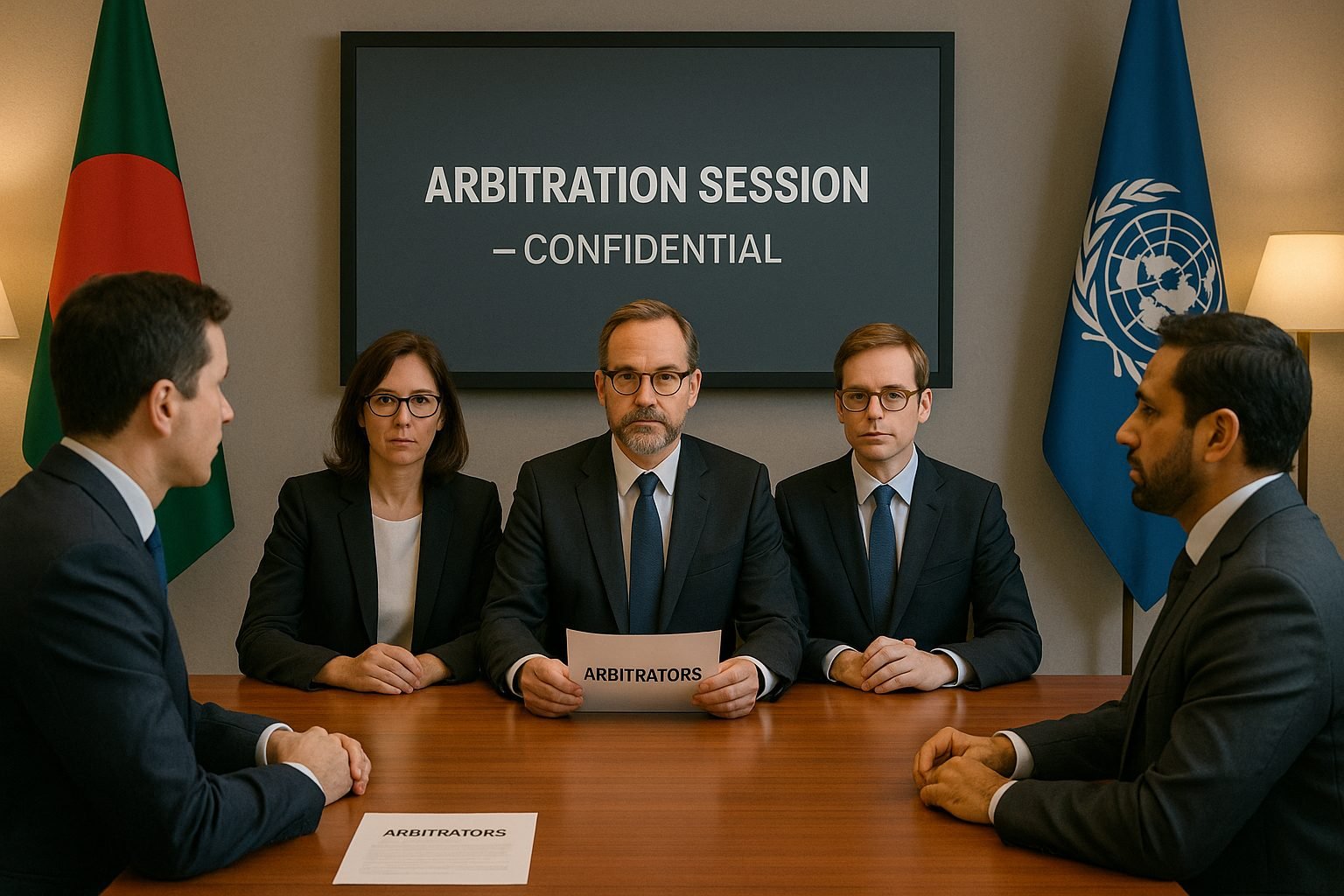
Bangladesh’s civil and commercial justice system stands at a pivotal juncture. With over 4 million pending cases and increasing demand for efficient, inclusive dispute resolution, recent reforms—particularly the 2025 amendment to the Legal Aid Services Act—have introduced mandatory mediation for select disputes. This article explores the existing judicial forums, the impact of legal aid reforms, and the structural separation of civil and criminal jurisdictions, offering strategic insights for litigants, lawyers, and policymakers.
I. Civil-Commercial Disputes: Nature and Forums
A. Common Civil-Commercial Disputes
Civil-commercial litigation in Bangladesh encompasses:
- Contractual breaches (e.g., supply, construction, employment)
- Property and land disputes
- Company law matters (e.g., shareholder rights, winding up)
- Banking and insurance claims
- Labor and industrial relations
These disputes often involve complex factual matrices, cross-border elements, and urgent interim relief, demanding both procedural clarity and judicial expertise.
B. Judicial Forums for Civil-Commercial Matters
Bangladesh’s judiciary offers a tiered structure for civil-commercial litigation:
Forum Jurisdiction Key Features Senior Assistant Judge Court Suits below BDT 25 lakh First-tier trial court Joint District Judge Court Suits above BDT 25 lakh Handles complex matters District Judge Court Appeals up to suit value 5 crore and original suits Supervisory role Artha Rin Adalat Loan recovery Specialized under Artha Rin Adalat Ain, 2003 Company Bench (High Court Division) Company law disputes Winding up, amalgamation, oppression Administrative Tribunals Service matters Governed by Service Rules
This structure reflects a functional specialization, but also creates fragmentation, especially when disputes span multiple legal domains (e.g., land and fraud).
II. Legal Aid Reform 2025: Mandatory Mediation
A. Overview of the Amendment
In July 2025, the Government of Bangladesh amended the Legal Aid Services Act, 2000, introducing mandatory mediation for nine categories of disputes before trial. These include:
- Family disputes (e.g., maintenance, custody)
- Land possession and boundary disputes
- Quasi-criminal matters (e.g., defamation, minor assault)
- Labor and employment grievances
Under the new regime:
- Legal Aid Offices must initiate mediation.
- Courts will not admit cases for trial unless mediation fails.
- Mediators are appointed from a certified panel, often including retired judges, lawyers, and trained professionals.
B. Objectives of the Reform
The reform aims to:
- Reduce case backlog (currently exceeding 4 million)
- Promote access to justice, especially for marginalized groups
- Encourage amicable resolution, preserving relationships
- Align with international best practices, including UNCITRAL and SDG 16
III. Analytical Perspectives: Benefits and Challenges
A. Benefits for Litigants
- Cost Efficiency: Mediation avoids prolonged litigation, reducing legal fees and court costs.
- Time Savings: Disputes may be resolved within weeks, not years.
- Confidentiality: Sensitive matters (e.g., family or business disputes) remain private.
- Empowerment: Parties retain control over outcomes, unlike imposed judgments.
- Relationship Preservation: Particularly vital in family, labor, and community disputes.
B. Structural Challenges
Despite its promise, mandatory mediation faces several hurdles:
Challenge Description: Capacity Deficit Shortage of trained mediators, especially in rural areas. Power Imbalance: Vulnerable parties may be coerced into unfair settlements. Enforcement Ambiguity Mediated agreements lack robust enforcement mechanisms. Procedural Delays Mediation adds a layer before trial, potentially slowing urgent relief. Awareness Gaps: Many litigants and lawyers remain unfamiliar with mediation benefits
These challenges underscore the need for institutional investment, training, and monitoring.
IV. Comparative Forum Analysis: Civil Courts vs. Vumi Oporadh Ain
The Vumi Oporadh Ain (Land Crime Act) introduces a quasi-criminal framework for land-related offenses, including:
- Illegal land grabbing
- Forgery of land documents
- Trespass and boundary violations
A. Jurisdictional Overlap
Forum Jurisdiction Remedy Civil Courts Ownership, possession, title Declaratory and injunctive relief Vumi Oporadh Tribunals Criminal conduct on land Penal sanctions
This duality creates forum shopping, conflicting judgments, and procedural confusion, especially when civil rights and criminal liability intersect.
B. Strategic Implications
Litigants must:
- Assess the nature of the dispute (civil vs. criminal)
- Coordinate filings to avoid contradictory outcomes
- Seek legal advice on forum selection and procedural strategy
V. Separation of Civil and Criminal Jurisdiction: Impact on Justice Delivery
Bangladesh’s lower judiciary is bifurcated:
- Civil Judges handle civil suits.
- Judicial Magistrates handle criminal cases.
A. Positive Impacts
- Specialization: Judges develop domain expertise.
- Efficiency: Parallel processing of civil and criminal matters.
- Reduced Bias: Avoids conflict of interest in mixed cases.
B. Coordination Challenges
- Fragmented Proceedings: Same facts may be litigated in two forums.
- Inconsistent Outcomes: Divergent findings on evidence or credibility.
- Delay in Relief: Civil remedies may be stalled pending criminal adjudication.
C. Recommendations
- Integrated Case Management Systems to track related proceedings.
- Judicial Training on cross-domain coordination.
- Legislative Clarification on precedence and procedural hierarchy.
VI. Strategic Recommendations for Litigants and Policymakers
A. For Litigants
- Explore mediation early, especially in family, land, and labor disputes.
- Consult specialized counsel for forum selection and procedural strategy.
- Document all communications, especially in pre-litigation phases.
- Use bilingual resources to understand rights and procedures.
B. For Policymakers
- Expand mediator training, especially in rural and marginalized communities.
- Digitize mediation platforms to enable remote access and tracking.
- Monitor mediation outcomes, ensuring fairness and enforceability.
- Clarify forum jurisdiction, especially in overlapping civil-criminal matters.
Conclusion
Bangladesh’s civil and commercial justice landscape is evolving. The introduction of mandatory mediation, the coexistence of civil and quasi-criminal forums, and the structural separation of jurisdictions present both opportunities and challenges. For litigants, these changes offer faster, cheaper, and more humane pathways to justice—but only if supported by institutional capacity, legal awareness, and strategic navigation.
As Bangladesh moves toward a more inclusive and efficient justice system, collaboration between courts, legal aid offices, mediators, and civil society will be key. The future of dispute resolution lies not just in adjudication, but in dialogue, empathy, and procedural innovation.